SIGMA-GEO offers electrical prospecting survey using the magnetotelluric (MT) sounding method (research depth up to 10 kilometers or more).
About technology
MT sounding is a type of inductive frequency sounding based on the study of the Earth's natural alternating electromagnetic field of various frequencies.
The nature of the low-frequency magnetotelluric field is primarily associated with the interaction of the flow of charged particles emanating from the Sun and changing over time (solar wind) with the magnetosphere and ionosphere of the Earth. High-frequency variations are mainly associated with the fields of distant thunderstorms.
Problems to be solved
MT sounding is the most in-depth method of electrical prospecting and allows solving a wide range of industrial and scientific problems from prospecting and exploration of mineral deposits to regional mapping of geological structures.
Methods of field work, equipment and facilities
Since the method is based on the study of the natural electromagnetic field of the Earth, the work methodology does not involve the use of transmitter coil.
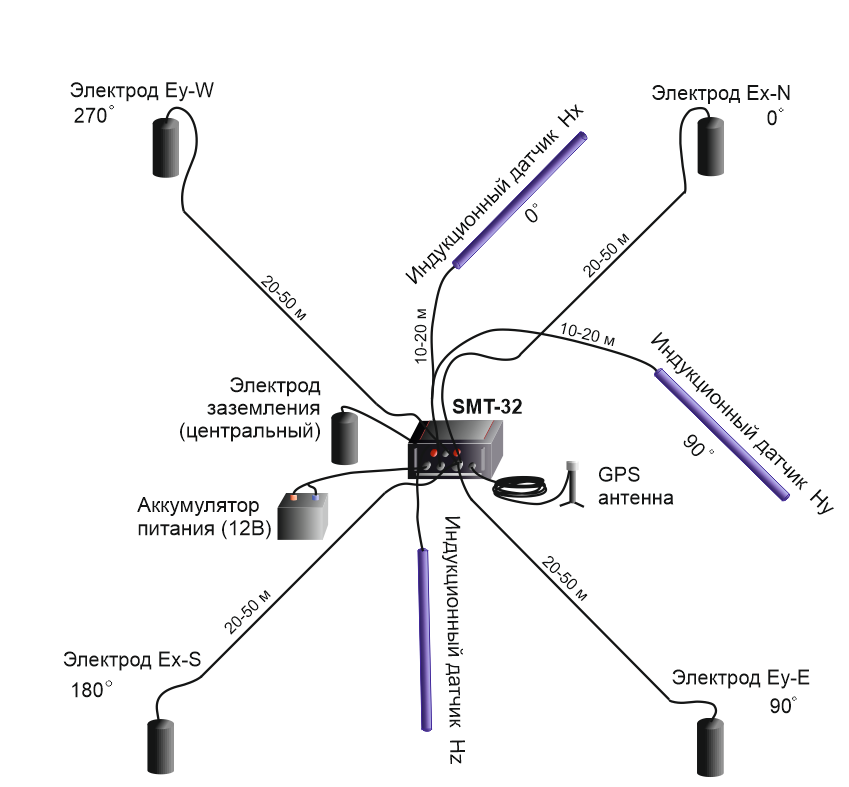
Electrical lines with non-polarizing electrodes are used as sensors of electrical field components (the lines are located perpendicularly, as a rule, with azimuths of 0° and 90°). Induction-coil sensor are used as sensors of magnetic components .
Example of a five-electrode
cross-shaped MT sounding station
To improve the quality of magnetotelluric (MT) field measurements, a synchronous measurement technique using a remote base station is used.
Digital meters SMT-32 are used during field electrical prospecting survey.
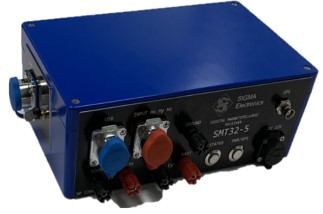
Digital meters SMT-32
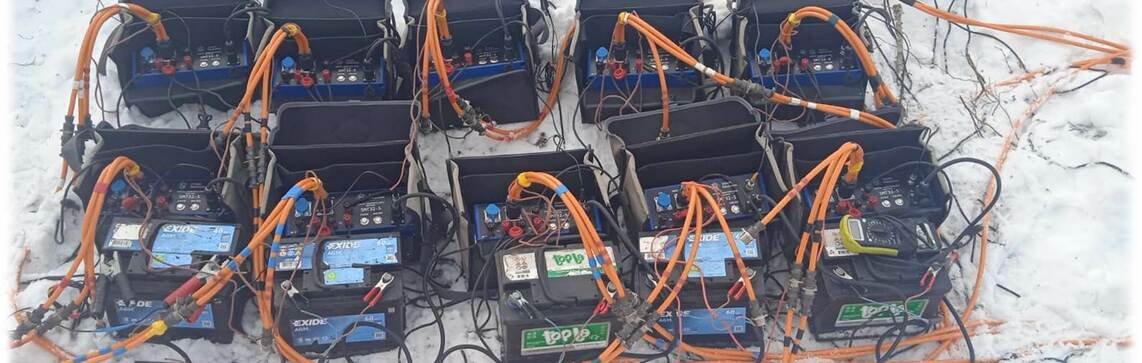
Field work of the MT soundings does not require significant resources. The fielded party is optimally equipped
 |
|
 |
|
 |
|
The average productivity of one fielded party per month is more than 120 physical points.
In-office studies
Processing of magnetotelluric data is carried out in two stages. At the first stage (during primary processing), the EpiKIT program is used: MT-field records are reviewed, and statistical robust rejection of data arrays obtained at each frequency is performed, aimed at suppressing the influence of the equipment’s own noise, random and man-made electromagnetic interference. At the deep processing stage, the MT-Corrector program is used, designed for viewing, editing and constructing smooth spline approximations of the frequency dependencies of the impedance tensor component, the Wiese-Parkinson matrix, the horizontal magnetic and telluric tensors.
Quantitative interpretation of result curves using modern software applications: LineInterMT, ZondMT1D, ZondMT2D.
Quality control
 According to the requirements of the Electrical Prospecting Instructions, control observations are carried out without fail in the amount of 5% of the total number of planned observations. However, for additional control, a quality assessment is performed using the QC-QA software, based on the percentage ratio of the impedance modulus to the modulus determination error (confidence interval) at each frequency and for each tensor component, the resulting average error calculated within one physical observation (picket).
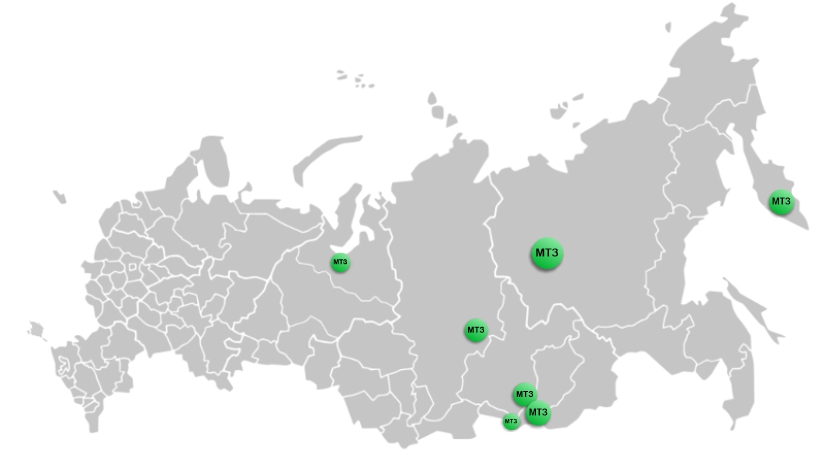
SIGMA-GEO work experience using the MT soundings method