Mining tasks
SIGMA-GEO offers the use of a transient electromagnetic method (TEM) in the near field zone in a shallow modification to search for mineral ore deposits.
The relevance
Currently an urgent task for subsoil users is to increase the efficiency and optimize production processes when developing ore deposits.
Solutions
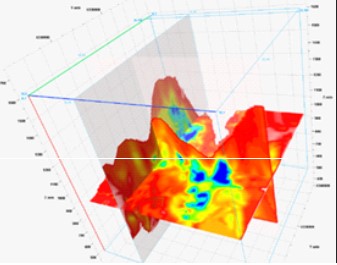
| 3D model of ore-bearing area according to sTEM data |
 |
sTEM is used for a detailed study of the geological structure of the upper part of the section by differentiating its constituent rocks by geoelectric properties.The main parameter studied is electrical resistivity.
As a rule, ore bodies are characterized by increased electrical conductivity, which makes the prognosis for their isolation and delineation sTEM method favorable.
Main directions in solving ore exploration problems
- Prospecting and exploration of primary mineral deposits.
- Prospecting and exploration of placer mineral deposits.
Possibilities of the sTEM method in solving ore exploration problems
- Mapping the boundaries of distribution of geological formations in plan and section.
- Identification and tracking of tectonic dislocations and mineralized zones.
- Mapping of halos of development of hydrothermally altered rocks, sulfidization, silicification.
- Mapping of watercourse and bedding rock of valleys and karsts.
- Study of the section of comminuted formations.
Advantages of the sTEM method in search for ore mineral deposits
- The object of exploration is characterized by increased electrical conductivity, which is a favorable factor for the sTEM method.
- sTEM stations do not require galvanic grounding. For this reason, research can be carried out at any time of the year, including on frozen and rocky soils.
- Possibility of determining section parameters using stations which size is less than the depth of the objects under study.
SIGMA-GEO experience in ore mineral deposits exploration
- Employees' experience in this area exceeds 20 years.
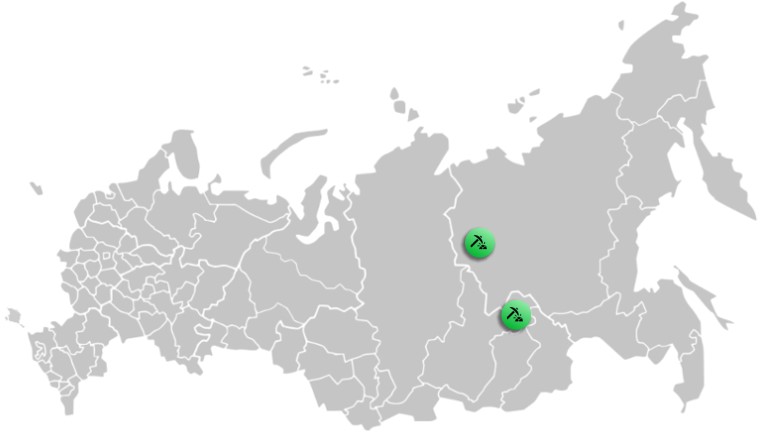
Geography of work