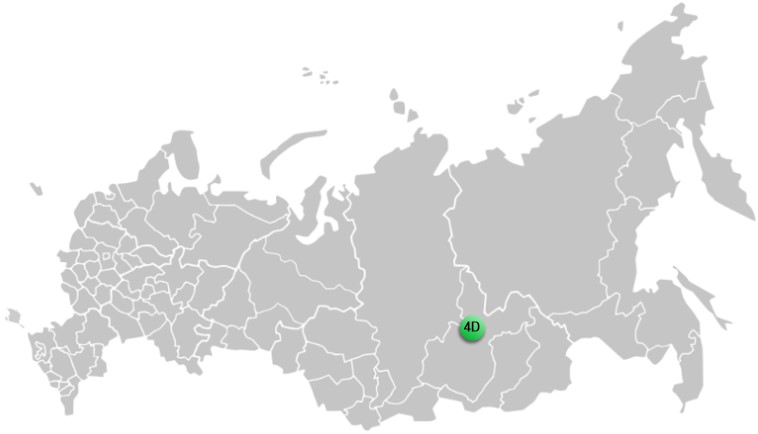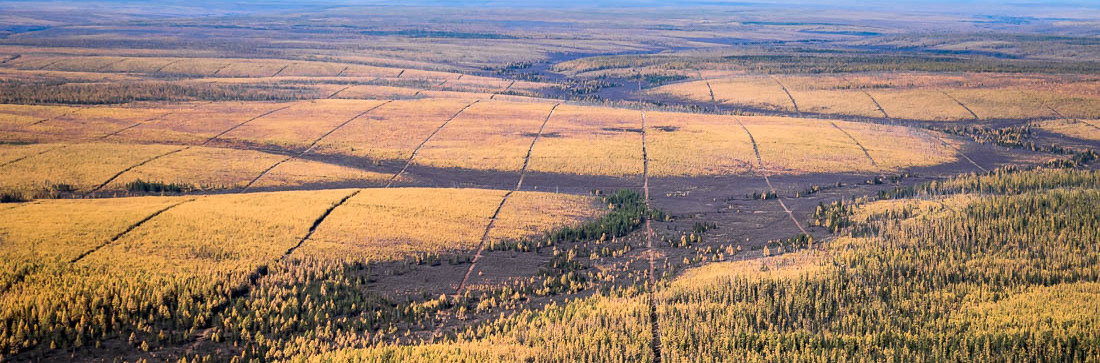
SIGMA-GEO offers 4D TEM monitoring studies.
About technology
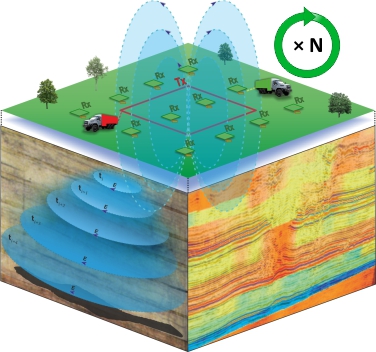
4D TEM is a monitoring study by probing the near-field transient EM sounding (TEM), which implies performing repeated measurements of the TEM in an areal modification with a certain frequency in time.
This technology finds its application at the operational stage of geological exploration.
Problems to be solved
- Monitoring the dynamics of water encroachment of collector layers during field operation.
- Determination of fluid contact positions.
Methods of field work, equipment and facilities
The 4D TEM methodology involves performing repeated measurements over a certain period of time with a complete reproduction of the original layout of the 3D TEM stations.
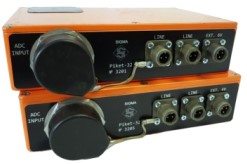
Station example
used in performing 4D TEM
.jpg)
4D TEM = 3DTEM× N repetitions at certain intervals.
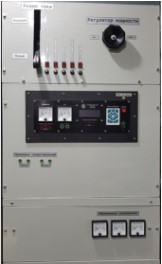
When carrying out 4D TEM field work, digital telemetric electrical exploration stations SGS-TEM are used.
|
Measuring devices SGS-TEM |
Transistor current switch SGS-CTU300 |
Optimal configuration of a fielded party:
 |
|
 |
|
 |
|
 |
|
In-office studies
Electromagnetic data processing is carried out in the modern TEM-Processing program, which includes statistical and robust signal accumulation methods, as well as a set of specialized frequency filtering algorithms, including noise reduction of a high-line frequency 50 hz.
Quantitative interpretation of signals is performed in the Model software package, based on algorithms for solving forward and inverse problems developed at the Institute of Petroleum Geology and Geophysics SB RAS.
Quality control
 According to the requirements of the Electrical Prospecting Instructions, control observations are carried out without fail in the amount of 5% of the total number of planned observations. However, for additional control at both the field and in-office stages of work, quality assessment is performed using advanced software:
- EMQC - a comprehensive system for assessing data quality, which allows to automatically perform quality control of the material and quickly identify data complicated by electromagnetic interference, anomalous and substandard curves based on quantitative QC quality indicators.
- EMIQ - specialized software for assessing the quality of interpretation of sTEM and TEM materials.
The effect of using the 4D TEM technique
- Possibility of prorationing control
- Optimization of the development system and plan for conversion to injection
- Identification of secondary alteration zones
- Monitoring the effectiveness of the flood pattern
- Interwell space geometrization
SIGMA-GEO work experience using the 4D TEM method